
Positive working capital indicates that a company has more current assets than liabilities and can cover upcoming expenses. Negative working capital implies that the company may struggle to meet its financial obligations. Managers who take a measure of a company’s turnover ratios can increase liquidity, and produce a high current ratio. If your current ratio balance is less than 1, you may have to borrow money or consider the sale of assets to raise cash.

Improving Current Ratio and Liquidity
- 11 Financial’s website is limited to the dissemination of general information pertaining to its advisory services, together with access to additional investment-related information, publications, and links.
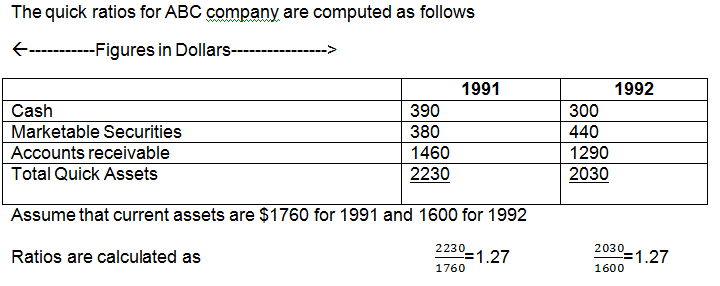
- Hence, it is a more conservative estimate of a company’s liquidity compared to the current ratio.
- The current liabilities of Company A and Company B are also very different.
- For example, the quick ratio is another financial metric that measures a company’s ability to meet its short-term obligations.
- One limitation of the current ratio emerges when using it to compare different companies with one another.
The current ratio measures a company’s ability to meet short-term obligations. Companies that focus only on short-term financial health may miss important information about the company’s long-term financial health. For example, a company may have a good current ratio but difficulty remaining competitive long-term without investing in research and development.
Company
It’s essential to analyze a company’s current ratio trends over time to identify any patterns or changes in its liquidity. For example, a declining current ratio could indicate deteriorating liquidity, journal entry for cash and credit transactions while an increasing current ratio could indicate improved liquidity. The current ratio only considers a company’s short-term liquidity, which may not provide a complete picture of its financial health.
The five major types of current assets are:
The current ratio and quick ratios measure a company’s financial health by comparing liquid assets to current or pressing liabilities. However, it’s important to remember that the current ratio has limitations and must be interpreted in the context of a company’s specific circumstances and industry norms. The current ratio does not consider the timing of cash flows, which is essential for evaluating a company’s liquidity.
Changes in Accounting Policies – Common Reasons for a Decrease in a Company’s Current Ratio
By implementing these strategies, business managers can strengthen their company’s liquidity position and reduce the risk of financial distress. Use the current ratio and the other ratios listed above to understand your business, and to make informed decisions. Some business owners use Excel for accounting, but you can increase productivity and make better decisions using automation. Liquidity is the ability to generate enough current assets to pay current liabilities, and owners use working capital to manage liquidity. Working capital is similar to the current ratio (current assets divided by current liabilities). To use the current ratio to make business decisions, you need to understand the balance sheet and the accounts that make up the balance sheet.
Liquidity comparison of two or more companies with same current ratio
In its Q fiscal results, Apple Inc. reported total current assets of $135.4 billion, slightly higher than its total current assets at the end of the 2021 fiscal year of $134.8 billion. However, the company’s liability composition significantly changed from 2021 to 2022. At the end of 2022, the company reported $154.0 billion of current liabilities, almost $29 billion greater than current liabilities from 2021. For example, a company may have a very high current ratio, but its accounts receivable may be very aged, perhaps because its customers pay slowly, which may be hidden in the current ratio. Analysts also must consider the quality of a company’s other assets vs. its obligations. If the inventory is unable to be sold, the current ratio may still look acceptable at one point in time, even though the company may be headed for default.
It’s important to review this financial statement to track financial performance. Current assets, which constitute the numerator in the Current Ratio formula, encompass assets that are either in cash or will be converted into cash within a year. It represents the funds a company can access swiftly to settle short-term obligations. However, special circumstances can affect the meaningfulness of the current ratio. For example, a financially healthy company could have an expensive one-time project that requires outlays of cash, say for emergency building improvements. Because buildings aren’t considered current assets, and the project ate through cash reserves, the current ratio could fall below 1.00 until more cash is earned.
In the above example, XYZ Company has current assets 2.32 times larger than current liabilities. In other words, for every $1 of current liability, the company has $2.32 of current assets available to pay for it. A low current ratio may indicate the company is not able to cover its current liabilities without having to sell its investments or delay payment on its own debts. In other words, it is defined as the total current assets divided by the total current liabilities. For example, if a company has $100,000 in current assets and $150,000 in current liabilities, then its current ratio is 0.6.


